Showing entries 811 to 820 of 5669
« 10 Newer Entries | 10 Older Entries »
Searching For: gp update (reset)
Password Verification Policy in MySQL 8.0.13

The new release 8.0.13 for MySQL is available since last week.
Concerning security, this comes with a new feature already announced: the Password Verification Policy.
Let’s have a look…

This aim of this feature is to secure the attempts to change a password by specifying the old one to be replaced.
It is turned off by default:

mysql> show variables like 'password_require_current';
+--------------------------+-------+
| Variable_name            | Value |
+--------------------------+-------+
| password_require_current | OFF   |
+--------------------------+-------+

and we can activate it by several ways (as for some other password features):
1. Globally, at the server level:

mysql> set persist password_require_current='ON';
mysql> show variables like 'password_require_current';
+--------------------------+-------+
| Variable_name            | Value | …
[Read more]
No-Downtime Cluster Software Upgrades

One important way to protect your data is to keep your Tungsten Clustering software up-to-date.

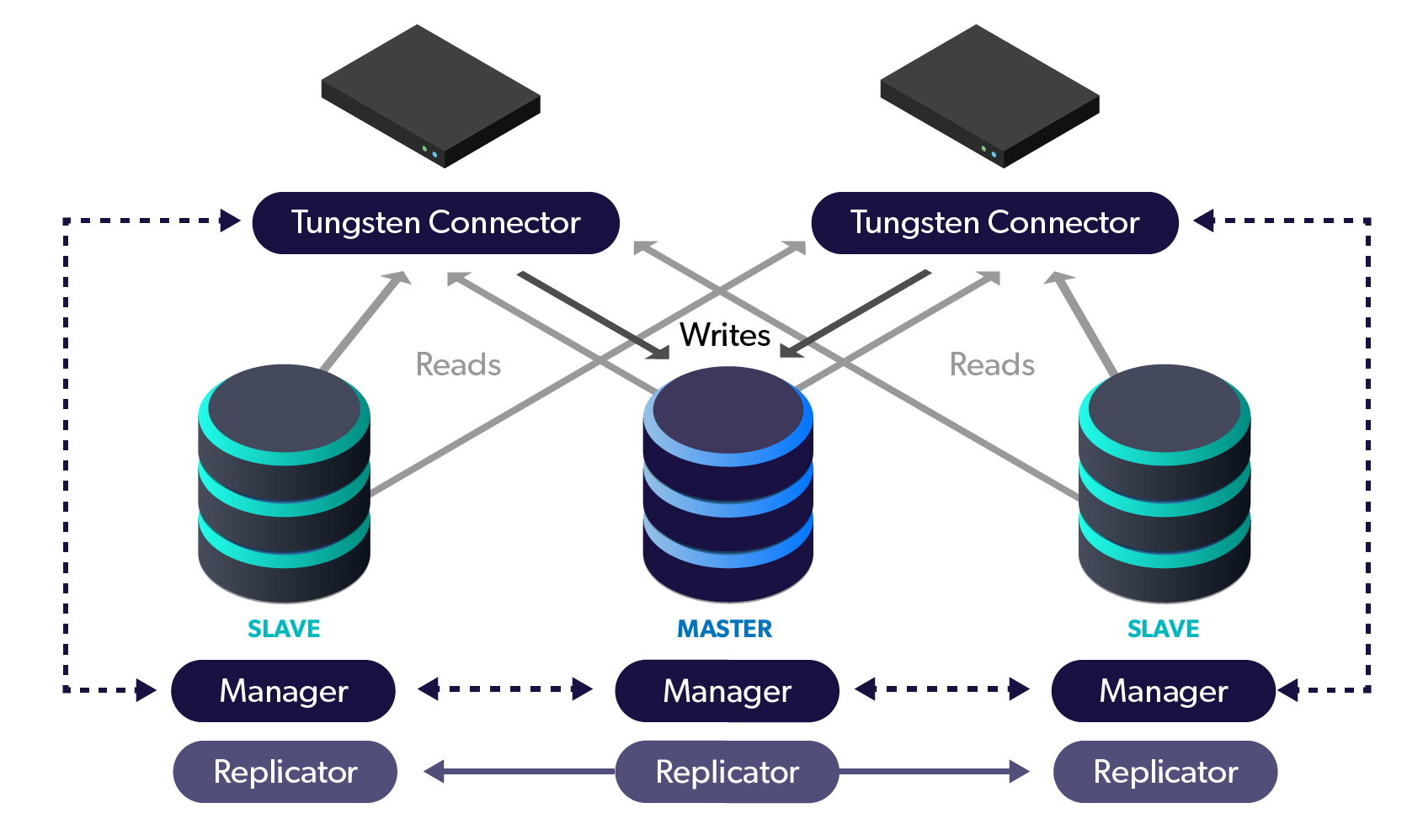
A standard cluster deployment uses three nodes, which allows for no-downtime upgrades along with the ability to have a fully available cluster during maintenance.

Please note that with only two database cluster nodes, there is a window of vulnerability created by leaving zero failover candidates available when the lone slave is taken down for service.

The Best Practices: Staging Performing a No-Downtime Upgrade for a Staging Deployment

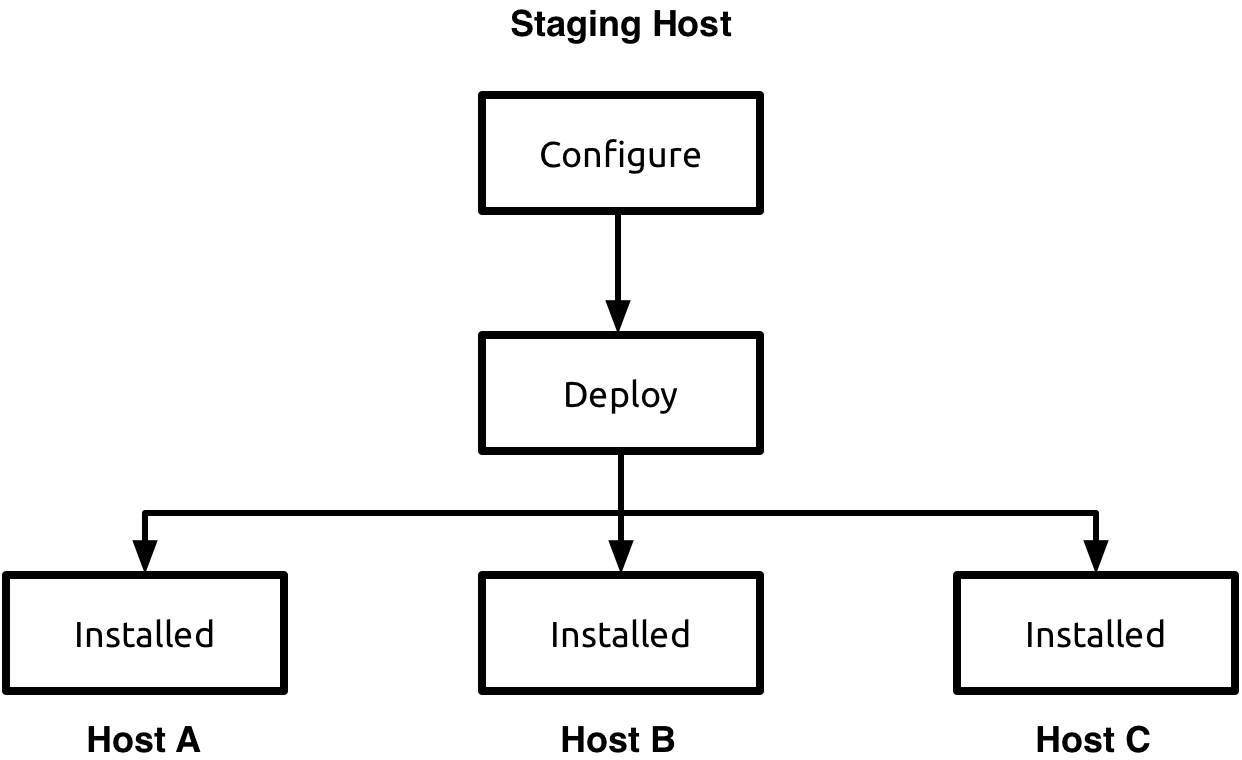
When upgrading a Staging-style deployment, all nodes are upgraded at once in parallel via the tools/tpm update command run from inside the staging directory on the staging host.

No Master switch happens, and all layers are restarted to use the new code. …

[Read more]
MySQL on Docker: Running ProxySQL as a Helper Container on Kubernetes

ProxySQL commonly sits between the application and database tiers, in so called reverse-proxy tier. When your application containers are orchestrated and managed by Kubernetes, you might want to use ProxySQL in front of your database servers.

In this post, we’ll show you how to run ProxySQL on Kubernetes as a helper container in a pod. We are going to use Wordpress as an example application. The data service is provided by our two-node MySQL Replication, deployed using ClusterControl and sitting outside of the Kubernetes network on a bare-metal infrastructure, as illustrated in the following diagram:

ProxySQL Docker Image

In this example, we are going to use ProxySQL Docker image maintained by …

[Read more]
MySQL Connector/J 8.0.13 has been released

Dear MySQL users,

Version 8.0.13 is the latest General Availability release of the 8.0
series of MySQL Connector/J. It is suitable for use with MySQL Server
versions 8.0, 5.7, 5.6, and 5.5. It supports the Java Database
Connectivity (JDBC) 4.2 API, and implements the X DevAPI.

This release includes the following new features and changes, also
described in more detail on

https://dev.mysql.com/doc/relnotes/connector-j/8.0/en/news-8-0-13.html

As always, we recommend that you check the “CHANGES” file in the
download archive to be aware of changes in behavior that might affect
your application.

To download MySQL Connector/J 8.0.13 GA, see the “Generally Available
(GA) Releases” tab at …

[Read more]
Effective Monitoring of MySQL with SCUMM Dashboards Part 1

We added a number of new dashboards for MySQL in our latest release of ClusterControl 1.7.0. - and in our previous blog, we showed you How to Monitor Your ProxySQL with Prometheus and ClusterControl.

In this blog, we will look at the MySQL Overview dashboard.

So, we have enabled the Agent Based Monitoring under the Dashboard tab to start collecting metrics to the nodes. Take note that when enabling the Agent Based Monitoring, you have the options to set the “Scrape Interval (seconds)” and “Data retention (days)”. Scraping Interval is where you want to set how aggressively Prometheus will harvest data from the target and Data Retention is how long you want …

[Read more]
Picking a Deployment Method: Staging versus INI

Tungsten Clustering is an extraordinarily flexible tool, with options at every layer of operation.

In this blog post, we will describe and discuss the two different methods for installing, updating and upgrading Tungsten Clustering software.

When first designing a deployment, the question of installation methodology is answered by inspecting the environment and reviewing the customer’s specific needs.

Staging Deployment Methodology

All for One and One for All

Staging deployments were the original method of installing Tungsten Clustering, and relied upon command-line tools to configure and install all cluster nodes at once from a central location called the staging server.

This staging server (which could be one of the cluster nodes) requires SSH access to all …

[Read more]
Is slave_exec_mode idempotent actually idempotent?

Co-Author: Rafael Alvarez

When you look up the word idempotence in wikipedia you get the following definition: Idempotence is the property of certain operations in mathematics and computer science whereby they can be applied multiple times without changing the result beyond the initial application.

When I think of idempotence in the sense of how IT operations work, the very first thing that comes to mind is Ansible. In Ansible you have a yml file that represents a state you want the target host to be in. For example, I can use the yum module to ensure that MySQL is installed on my RHEL virtual machine. When the playbook is run, it checks if MySQL is installed. If not, it will install it. It is installed, then it will ignore that …

[Read more]
MySQL Adventures: GTID Replication In AWS RDS

You all heard about that today AWS announced that RDS is started to support GTID Transactions. I’m a great fan of RDS but not for GTID. Since RDS has better settings and configurations to perform well. Many of you people read about the AWS What’s new page regarding GTID. But here we are going to talk about the actual benefits and drawbacks.

RDS supports GTID on MySQL 5.7.23 or later. But AWS released this version on Oct10 (two days before). So, for now, this is the only version which supports GTID.

NOTE: GTID supports only for RDS, its not available for Aurora. It may support in future)
Update : 27 March 2019: Aurora MySQL 5.7 supports GTID. Find the relavent link below.

Before configuring the GTID, lets have a look at what is GTID?

  • GTID stands for Global Transaction Identifier.
  • It’ll generate a …
[Read more]
How to Fix ProxySQL Configuration When it Won’t Start

With the exception of the three configuration variables described here, ProxySQL will only parse the configuration files the first time it is started, or if the proxysql.db file is missing for some other reason.

If we want to change any of this data we need to do so via ProxySQL’s admin interface and then save them to disk. That’s fine if ProxySQL is running, but what if it won’t start because of these values?

For example, perhaps we accidentally configured ProxySQL to run on port 3306 and restarted it, but there’s already a production MySQL instance running on this port. ProxySQL won’t start, so we can’t edit the value that way:

2018-10-02 09:18:33 network.cpp:53:listen_on_port(): [ERROR] bind(): Address already in use

We could delete proxysql.db and have it reload the configuration files, but …

[Read more]
Instrumenting Read Only Transactions in InnoDB

Probably not well known but quite an important optimization was introduced in MySQL 5.6 – reduced overhead for “read only transactions”. While usually by a “transaction” we mean a query or a group of queries that change data, with transaction engines like InnoDB, every data read or write operation is a transaction.

Now, as a non-locking read operation obviously has less impact on the data, it does not need all the instrumenting overhead a write transaction has. The main thing that can be avoided, as described by documentation, is the transaction ID. So, since MySQL 5.6, a read only transaction does not have a transaction ID. Moreover, such a transaction is not visible in the SHOW ENGINE INNODB STATUS output, though I will not go deeper on what really that means under the hood in this article. The fact is that this optimization …

[Read more]
Showing entries 811 to 820 of 5669
« 10 Newer Entries | 10 Older Entries »