MySQL-Sandbox is a great tool for testing a new
release, and in fact this is what I do when a new MySQL tarball
becomes available. I don't think many people are aware of the
full testing capabilities of the sandbox, though.
When you think about testing, you may just think of creating a
sandbox with the new tarball, and then hammering it with your pet
procedure. That works, of course, as the main purpose of
MySQL-Sandbox is to allow you to do just that. There is, however,
a full test suite that can tell you in a short while if your
tarball is compatible with the past or not.
This procedure is quite strict. It has happened several times
that I caught a bug in a new release of MySQL, or Percona Server,
or MariaDB, just by running this suite.
How MySQL-Sandbox gets testedBefore describing how to test, I
would like to show what I do. When a new version of MySQL-Sandbox
is ready …
The latest from the MySQL community
Ideas, releases, practical guides, and perspectives from the people building with MySQL.
We had a great time meeting with folks from the industry and are excited about the innovations being pursued by the community and various companies.
Videos of our keynote panel participation and talks are available now.
Percona Live 2015 Keynote Panel discussion - Ritesh Chhajer
High Availability using Percona XtraDB Cluster - Trey Raymond & Yashada Jadhav
MySQL Performance Analyzer - Xiang Rao & Ashwin Nellore
…
We had a great time meeting with folks from the industry and are excited about the innovations being pursued by the community and various companies.
Videos of our keynote panel participation and talks are available now.
Percona Live 2015 Keynote Panel discussion - Ritesh Chhajer
High Availability using Percona XtraDB Cluster - Trey Raymond & Yashada Jadhav
MySQL Performance Analyzer - Xiang Rao & Ashwin Nellore
…
Yet again, this log buffer edition brings some rich blog posts from Oracle, SQL Server and MySQL.
Oracle:
- Installing Oracle XE, ORDS and Apex on CentOS
- Major Growth is Expected in the DBaaS Space. Are Your Skills Ready?
- How to Hide Actions in OBPM 12c Workspace
- You can configure auto refresh for ADF BC cached LOV and this works out of the box, no special coding is needed.
- Search and …
There is nothing more to be said:
SELECT
gen.TABLE_SCHEMA
, gen.TABLE_NAME
, (select
count(TABLE_NAME) from information_schema.columns idx
where
idx.TABLE_SCHEMA = gen.TABLE_SCHEMA
and idx.TABLE_NAME=gen.TABLE_NAME
) as COLUMN_NUM
, (select
count(TABLE_NAME) from information_schema.columns idx
where
idx.TABLE_SCHEMA = gen.TABLE_SCHEMA
and idx.TABLE_NAME=gen.TABLE_NAME
and COLUMN_KEY != ""
) as INDEX_NUM_ALL
, (select
count(TABLE_NAME) from information_schema.columns idx
where
idx.TABLE_SCHEMA = gen.TABLE_SCHEMA
and idx.TABLE_NAME=gen.TABLE_NAME
and COLUMN_KEY = "PRI"
) as INDEX_NUM_PRI
, (select
count(TABLE_NAME) from information_schema.columns idx
where
idx.TABLE_SCHEMA = gen.TABLE_SCHEMA
and idx.TABLE_NAME=gen.TABLE_NAME
and COLUMN_KEY = "UNI"
) as INDEX_NUM_UNI
, (select
count(TABLE_NAME) from information_schema.columns idx
where
idx.TABLE_SCHEMA = gen.TABLE_SCHEMA
and idx.TABLE_NAME=gen.TABLE_NAME
and COLUMN_KEY = "MUL"
) as INDEX_NUM_MUL

from …
[Read more]
Being schemaless is one of the key features of MongoDB. On the bright side this allows developers to easily modify the schema of their collections without waiting for the database to be ready to accept a new schema. However schemaless is not free and one of the drawbacks is write amplification. Let’s focus on that topic.
Write amplification?
The link between schema and write amplification is not obvious at first sight. So let’s first look at a table in the relational world:
mysql> SELECT * FROM user LIMIT 2;
+----+-------+------------+-----------+-----------+----------------------------------+---------+-----------------------------------+------------+------------+
| id | login | first_name | last_name | city      | country                          | zipcode | address                           | password   | birth_year | …
[Read more]
Last week I wrote up my thoughts about the Percona acquisition of
Tokutek from the perspective of TokuDB and TokuMX[se]. In this third blog of the trilogy
I'll cover the acquisition and the future of the Fractal Tree
Index. The Fractal Tree Index is the foundational technology upon
which all Tokutek products are built.
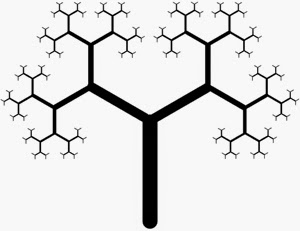
So what is a Fractal Tree Index? To quote the Wikipedia page:
"a Fractal Tree index is a tree data structure that keeps data
sorted and allows searches and …
An idea for a benchmark based on the “arrival request” rate that I wrote about in a post headlined “Introducing new type of benchmark” back in 2012 was implemented in Sysbench. However, Sysbench provides only a simple workload, so to be able to compare InnoDB with TokuDB, and later MongoDB with Percona TokuMX, I wanted to use more complicated scenarios. (Both TokuDB and TokuMX are part of Percona’s product line, in the case you missed Tokutek now part of the Percona family.)
Thanks to Facebook – they provide LinkBench, a benchmark that emulates the social graph …
[Read more]
There are tools like pt-kill from the percona tool kit that may
print/kill the long running transactions at MariaDB, MySQL or at
Percona data instances, but a lot of backup scripts are just some
simple bash lines.
So checking for long running transactions before the backup to be
executed seems to be a step that is missed a lot.
Here is one line that might be just added in every bash script
before the backup to be executed
Variant 1. Just log all the processlist entries and calculate
which ones were running longer than TIMELIMIT:
$ export TIMELIMIT=70 && echo "$(date) : check for long runnig queries start:" >> /tmp/processlist.list.to.kill && mysql -BN -e 'show processlist;' | tee -a /tmp/processlist.list.to.kill | awk -vlongtime=${TIMELIMIT} '($6>longtime){print "kill "$1";"}' | tee -a /tmp/processlist.list.to.kill
Variant 2: Log all the processlist, calculate the calculate which processes are …
[Read more]
A few days ago I wrote up my thoughts about the Percona acquisition of
Tokutek with respect to TokuDB. In this blog I'm going to do
the same for TokuMX and TokuMXse. And in a few days I'll wrap up
this trilogy by sharing my thoughts about Fractal Tree
Indexes.
Again, when I'm writing up something that I was very involved
with in the past I think it's important to disclose that I worked
at Tokutek for 3.5 years (08/2011 - 01/2015) as VP/Engineering
and I do not have any equity in Tokutek or Percona.
Since much of the MySQL crowd might be hearing about Tokutek's
"other products" for the first time I'll provide a little history
of both of the products before I dive in deeper.
TokuMX is a fork of MongoDB …