We will show you how to list all databases in MySQL, i.e how to have a list of all MySQL ...
The post How To Show A List Of All DataBases In MySQL appeared first on RoseHosting.
We will show you how to list all databases in MySQL, i.e how to have a list of all MySQL ...
The post How To Show A List Of All DataBases In MySQL appeared first on RoseHosting.
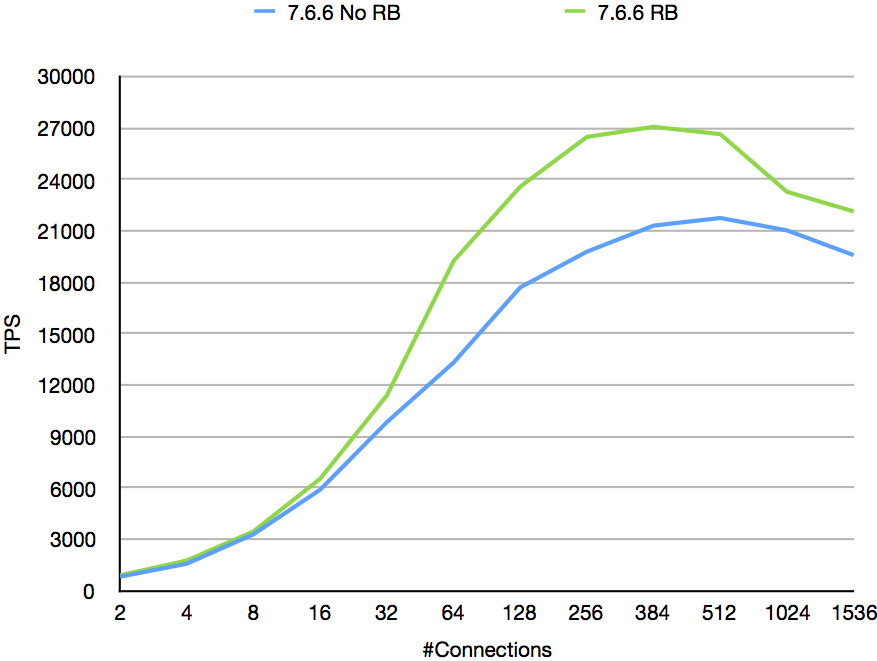
The previous blog demonstrated the
improvements from using the Read Backup
feature in NDB in a tightly connected on premise installation.
Now we will
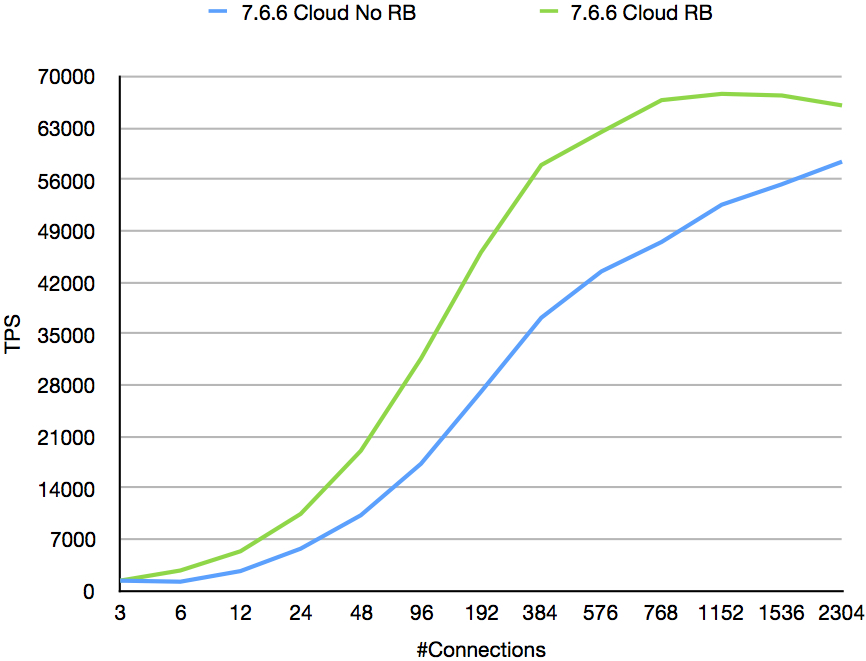
show how the performance is impacted when running on the Oracle
cloud.
In both benchmarks we show here the MySQL Server and the NDB data
node
are colocated and we have one node group where the combined data
nodes
and MySQL Servers are placed in their own availability domain. We
use all
3 availability domains and thus we have 3 synchronous replicas of
the
data in the database. This means that all communication between
data nodes
and all communication not using the local data node from the
MySQL server
will also communicate to another availability …
Read Backup was a new feature in MySQL Cluster
7.5. When MySQL
Cluster 7.5 was released I was already busily engaged in
working
on the partial LCP feature we now released in 7.6. So I had
not
much time producing benchmarks showing the impact of the
Read Backup feature.
Read Backup means that committed reads in NDB can use the
backup
replicas as well. In NDB tables reads are already directed
towards
the primary replica. The reason is that MySQL Cluster wants
to
ensure that applications can trust that a reader can see his
own
updates. Many modern NoSQL DBMSs lack this feature since they
are
using eventual replication and a very flexible scheduling of
which
replicas to read. NDB provides a stronger …
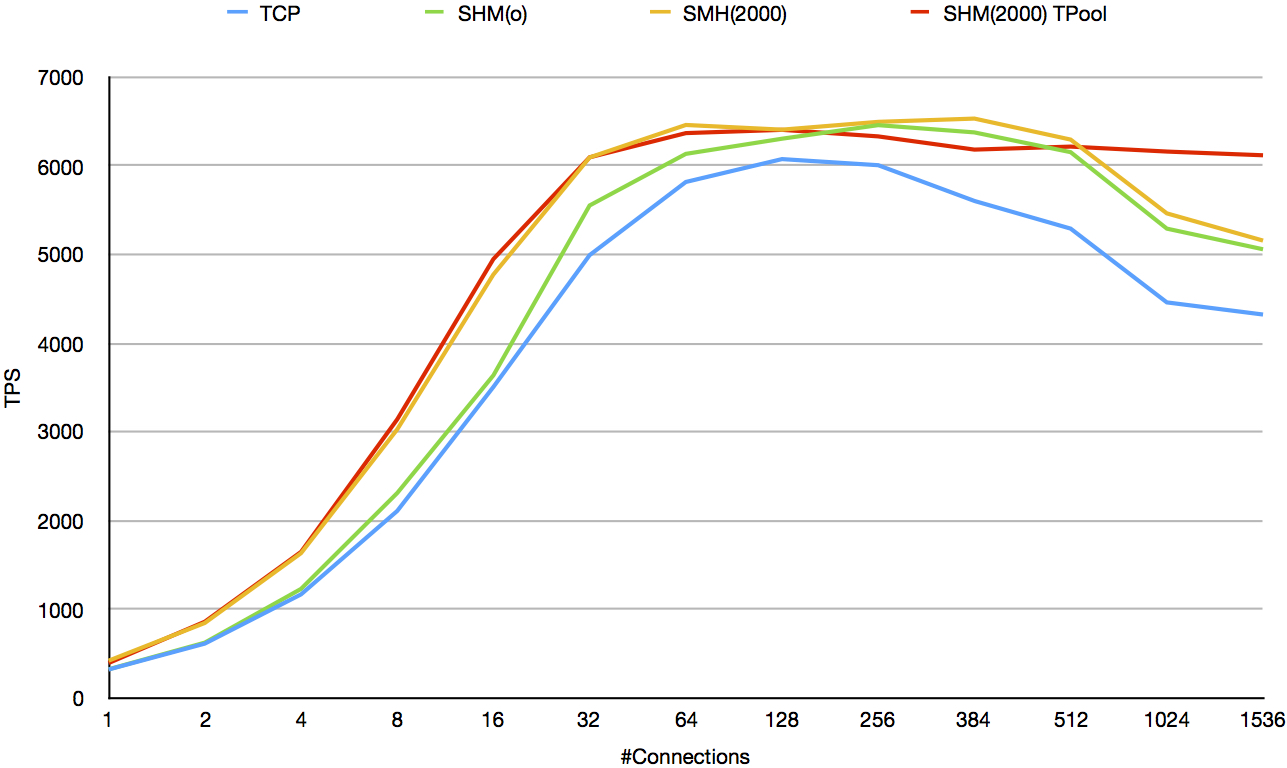
Looking at the graphs in the previous blog
post one can see that
MySQL Cluster 7.6 using the shared memory transporter can
improve
performance at very high thread counts by more than 100%.
Still
the performance is still dropping fairly significantly moving
from
512 to 1536 threads. The MySQL Server using the NDB
transporter
scales very well on all sorts of architectures and using very
many
cores. But I have noted that when the number of connections
goes
beyond some limit (in my benchmarks usually around 512
threads),
the performance starts to drop.
Actually in the commercial version of MySQL Cluster help is
available
to resolve this problem. The thread pool was developed by me and
a team
of performance …
Container orchestration tools simplify the running of a distributed system, by deploying and redeploying containers and handling any failures that occur. One might need to move applications around, e.g., to handle updates, scaling, or underlying host failures. While this sounds great, it does not always work well with a strongly consistent database cluster like Galera. You can’t just move database nodes around, they are not stateless applications. Also, the order in which you perform operations on a cluster has high significance. For instance, restarting a Galera cluster has to start from the most advanced node, or else you will lose data. Therefore, we’ll show you how to run Galera Cluster on Docker without a container orchestration tool, so you have total control.
Related resources
MySQL on Docker - How to Containerize Your …
[Read more]As follow up to the previous message posted on June 4, 2018 please find below the shows where you can find MySQL during June this year:
DataOps in June 21-22, 2018 in Barcelona, Spain
MySQL is a Community sponsor of this event where our colleague Fred Descamps, the MySQL Community Manager is having following talk:
Some time ago, our team released a new version of TwinDB Backup Tool that contains minor fixed and some major improvements. In this article I want to highlight major features in this release. Status refactoring The tool stores backups metadata in a JSON file that I will refer further as the status. The status is […]
The post TwinDB Backup Tool Release 2.15.7 appeared first on TwinDB.
Due to a strong customer demand FromDual offers 2018 two extra MySQL/MariaDB trainings with its Training partner The Linuxhotel in Essen (Germany). Those trainings are in English.
More information about the contents of the trainings can be found at Advanced MySQL and MariaDB training.
For conditions and booking: MariaDB Performance Tuning and Advanced MySQL Training.
For specific MariaDB or MySQL on-site Consulting or in-house Training please get in …
[Read more]Due to a strong customer demand FromDual offers 2018 two extra MySQL/MariaDB trainings with its Training partner The Linuxhotel in Essen (Germany). Those trainings are in English.
More information about the contents of the trainings can be found at Advanced MySQL and MariaDB training.
For conditions and booking: MariaDB Performance Tuning and Advanced MySQL Training.
For specific MariaDB or MySQL on-site Consulting or in-house Training please get in …
[Read more]Overview
There are times when I need to restore a slave from a backup of a master or another slave, but too many times I have taken the typical approach of taking the backup on the source server and then copying it to the target server. This takes a great deal of time, especially as your database grows in size.
These steps are going to detail how to use Netcat (nc) and Percona Xtrabackup (innobackupexec) to stream the backup from the source server to the target server, saving a great deal of time by copying the data only once to the desired location. While the data is streaming to the target server, it’s being compressed and then uncompressed on the fly, reducing the amount of traffic going across the network by around 85% to 90% (typical backup compression ratios of MySQL Innodb I have witnessed are in this range). I will also provide a simple script to complete these steps to give you a start at creating your …
[Read more]