Showing entries 631 to 640 of 5669
« 10 Newer Entries | 10 Older Entries »
Searching For: gp update (reset)
How to Build a Percona Server “Stack” on a Raspberry Pi 3+

The blog post How to Compile Percona Server for MySQL 5.7 in Raspberry Pi 3 by Walter Garcia, inspired me to create an updated install of Percona Server for the Raspberry Pi 3+.

This how-to post covers installing from source and being able to use Percona Server for MySQL in any of your maker projects. I have included everything you need to have a complete Percona Server, ready to store data collection for your weather station, your GPS data, or any other project you can think of that would require data collection in a database.

My years of hands-on support of Percona Server enable me to customize the install a bit. I wanted to build a full Percona …

[Read more]

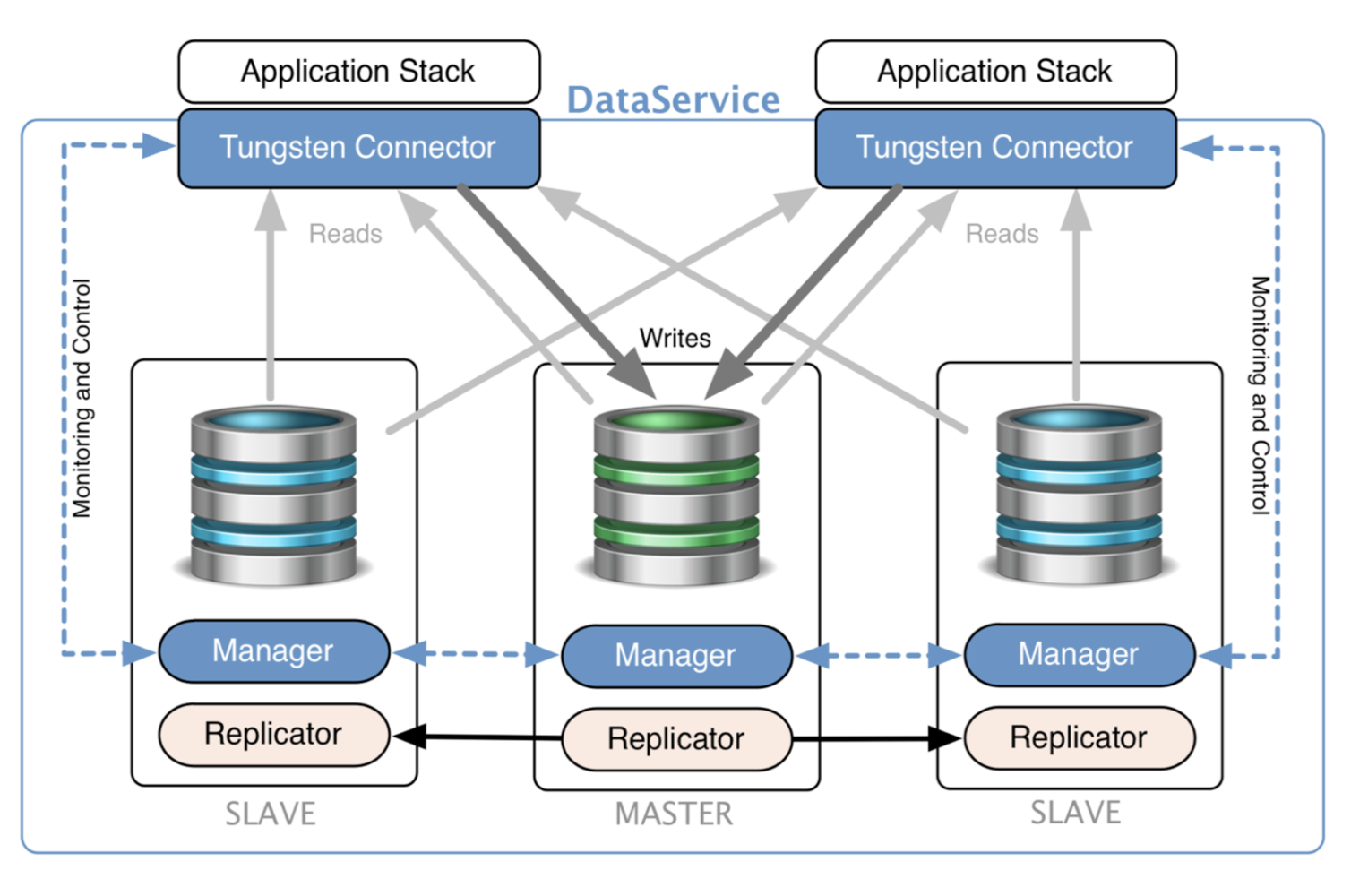
Tungsten Clustering 5.4.0 and Tungsten Replicator 5.4.0 Released

Continuent is pleased to announce that the following new software releases are now available:

  • Tungsten Clustering version 5.4.0
  • Tungsten Replicator version 5.4.0

Releases 5.4.0 is significant in that it introduces MySQL 8 support, along with many new features, stability improvements and bug fixes.

Highlights common to both products:

Improvements, new features and functionality

  • Two new utility scripts have been added to the release to help with setting the Replicator position:
    • tungsten_find_position, which assists with locating information in the THL based on the provided MySQL binary log event position and outputs a dsctl set
[Read more]
Tungsten Clustering 6.1.0 and Tungsten Replicator 6.1.0 Released

Continuent is pleased to announce that the following new software releases are now available:

  • Tungsten Clustering version 6.1.0
  • Tungsten Replicator version 6.1.0

Release 6.1.0 is significant in that it introduces MySQL 8 support, along with many new features, stability improvements and bug fixes.

Highlights common to both products:

Improvements, new features and functionality

  • Two new utility scripts have been added to the release to help with setting the Replicator position:
    • tungsten_find_position, which assists with locating information in the THL based on the provided MySQL binary log event position and outputs a dsctl set command …
[Read more]
In a proxy-ed world, where do connections come from?

Overview The Skinny

Database Proxies provide a single entry point into MySQL for the calling client applications.

Proxies are wonderful tools to handle various situations like a master role switch to another node for maintenance, or for transparency with read and write connections.

However, when the time comes to perform the switch action, all of the calling clients have been funneled through the proxy, so identification of the calling host from the database itself becomes difficult.

The Problem What is going on?

Let’s illustrate how not knowing the source of a client connection can be an issue for the database administrator…

In the following diagram, three client applications connect to a Tungsten Cluster via the Connector proxy:

[Read more]
MySQL TIMESTAMP with Simple Examples

This tutorial explains MySQL TIMESTAMP and TIMESTAMP field characteristics such as automated initialization and updating. We’ll describe their usages with the help of simple examples. 1. TIMESTAMP Syntax 2. TIMESTAMP Simple Examples 3. Set Timezone and Use Timestamp 4. Auto Init and Update Timestamp Let’s now go through each of the section one by one. MySQL TIMESTAMP The MySQL TIMESTAMP is a transient data type that contains a mixture of date and time. It is exactly 19 characters long. The structure of a TIMESTAMP field is as follows: Syntax # MySQL Timestamp YYYY-MM-DD HH:MM:SS The TIMESTAMP value shows in UTC

The post MySQL TIMESTAMP with Simple Examples appeared first on Learn Programming and Software Testing.

Database Systems and Indexes – What you should know about Indexes for Performance Optimization ?

Optimal Indexing for Performance – How to plan Index Ops. ? 

An index or database index is a data structure which is used to quickly locate and access the data in a database table. Indexes are created on columns which will be the Search key that contains a copy of the primary key or candidate key of the table. These values are stored in sorted order so that the corresponding data can be accessed quickly (Note that the data may or may not be stored in sorted order). They are also Data Reference Pointers holding the address of the disk block where that particular key value can be found. Indexing in database systems is similar to what we see in books. There are complex design trade-offs involving lookup performance, index size, and index-update performance. Many index designs exhibit logarithmic (O(log(N))) lookup performance and in some applications it is possible to achieve flat (O(1)) performance. Indices can …

[Read more]
MySQL Server 8.0.17: Thanks for the Contributions

Tweet

MySQL 8.0.17 was released Monday and it includes great features such as the Clone feature and multi-valued indexes. There are also several nice contributions from the community. These are the changes that this blog is about.

The contributions to MySQL Server 8.0.17 include patches from Facebook, Daniël van Eeden, Mattias Jonsson, and Simon Mudd (all from Booking.com), Daniel Black, Yibo Cai (from Arm Technology), Josh Braden, and Zhou Mengkang. The larger contributions are:

  • The mysql client program now sends os_user and os_sudouser connection attributes, when available, to indicate the name of the operating system user running the program and the value of the SUDO_USER environment variable, respectively. For general information …
[Read more]
How to Test MySQL Server Hostname with ProxySQL Multiplexing

Overview

While working on a MySQL Galera cluster with ProxySQL, I was in the process of testing traffic going to the MySQL nodes by using the @@hostname command to ensure which MySQL host behind the proxy the query ran on. This was important as my client is using query rules to route traffic according to the rule to either the master or the slave.  But to my surprise, I didn’t always get the result that I was expecting.  This is where ProxySQL multiplexing comes into play.

Scenario

In my scenario, I was on a test server connecting to ProxySQL which was then routing my queries to the MySQL Galera nodes.  I would connect into ProxySQL using the MySQL client.

Important note: When testing query routing with ProxySQL using comments and the MySQL client, you have to use the “-c” command line option in order for the comment to not be stripped away when running queries.  You …

[Read more]
Connector/Python C Extension Prepared Statement Support

Tweet

MySQL Connector/Python 8 made the C Extension the default for the platform/Python version combinations supporting it. One thing that was missing from the C Extension implementation (unless you used the _mysql_connector module) was support for prepared statements. That has been taken care of with the release of version 8.0.17.

The two main advantages of using prepared statements are security and performance. The security comes in as you can pass query parameters and have them applied server-side, so you are sure they are quoted and escaped correctly taking the data type into consideration. The performance benefit happens, when you execute the same query (except for the parameters) several times as MySQL will prepare it only …

[Read more]
MySQL Router 8.0.17 and the REST API

Since MySQL 8.0.16, the Router as the possibility to launch an internal webserver (see Jan’s blog post).

Even if this webserver could serve static files, it was the first piece of a much more interesting solution that is now available since 8.0.17.

It’s possible now to query the MySQL Router via its REST API and get a lot of useful information.

Setup

Let’s first configure our MySQL Router to take advantages of this new feature. In this example, I will add the following lines to /etc/mysqlrouter/mysqlrouter.conf that I created using the --bootsrapcommand line argument:

[http_server]
port=8080

[rest_api]

[rest_router]
require_realm=somerealm

[rest_routing]
require_realm=somerealm …
[Read more]
Showing entries 631 to 640 of 5669
« 10 Newer Entries | 10 Older Entries »