Community journal

The latest from the MySQL community

Ideas, releases, practical guides, and perspectives from the people building with MySQL.

Follow the feed
Showing entries 1351 to 1360 of 5700 « Previous | Next »
Searching For: gp update (reset)
Debugging Large Data with Rewriter

A customer showed that a particular client reported a less-than-helpful error message when it tried to display some meta-data about a table.
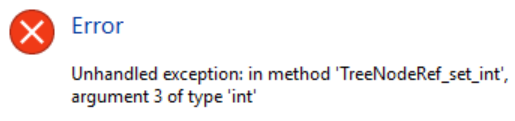
I couldn’t repeat the behavior with just a copy of the schema, so I suspected it was because of the size of data in the customer’s server – somebody had used an int where they needed a long.

The customer’s data was quite large – many hundreds of GB – more than I could easily whip up on my laptop to test. But, I didn’t really need all that data, or even any data at all; I just needed MySQL to pretend it had all that data. Specifically, I needed information_schema to report a large data_length.

Enter Rewriter, the query rewrite plugin that ships …

[Read more]
Auditing MySQL Users With McAfee Plugin

It is a common auditing requirement to log user connection events, including whether or not authentication was successful.
There are a number of alternatives available for MySQL, but unfortunately there is no built-in functionality at the time of this writing. In this post we will discuss auditing MySQL users with McAfee plugin, which is available under GPL Version 2 license.

Installation instructions

These apply to debian-based hosts, but instructions for red hat are similar.

1. Download latest plugin release from github.

At the time of this post for MySQL 5.5 you can get:

wget https://bintray.com/mcafee/mysql-audit-plugin/download_file?file_path=1.0.9-release%2Faudit-plugin-mysql-5.5-1.0.9-585-linux-x86_64.zip

2. Decompress …

[Read more]
How X Plugin Works Under the Hood

In this blog post, we’ll look at what MySQL does under the hood to transform NoSQL requests to SQL (and then store them in InnoDB transactional engine) when using the X Plugin.

X Plugin allows MySQL to function as a document store. We don’t need to define any schema or use SQL language while still being a fully ACID database. Sounds like magic – but we know the only thing that magic does is make planes fly!

Alexander already wrote a blog post exploring how the X Plugin works, with some examples. In this post, I am going to show some more query examples and how they are transformed.

I have enabled the slow query …

[Read more]
Maximizing Database Performance – MySQL Tuning Best Practices

With the added complexity of growing data volumes and ever changing workloads, database performance tuning is now necessary to maximize resource utilizations and system performance. However, performance tuning is often easier said than done.

Let’s face it, tuning is difficult for a number of reasons. For one thing, it requires a significant amount of expertise in order to understand execution plans, and often update or re-write good SQL. On top of that, tuning is usually very time consuming. There will always be a large volume of SQL statements to sort through, which may lead to uncertainty around which specific statement needs tuning; and given every statement is different, so too is the tuning approach.

As data volumes grow and technology becomes increasingly complex, it is becoming more important to tune databases properly to deliver end-user experience and to lower infrastructure costs. Performance tuning can help database …

[Read more]
MySQL Group Replication for MySQL 5.7.15

Hi all, it is time again to do another preview release of MySQL Group Replication, the plugin that brings multi-master update everywhere support to MySQL, like we described in the Hello World post.

We are very proud to present the eighth preview release of MySQL Group Replication plugin, based on MySQL Server 5.7.15.…

Consul, ProxySQL and MySQL HA

When it comes to “decision time” about which type of MySQL HA (high-availability) solution to implement, and how to architect the solution, many questions come to mind. The most important questions are:

  • “What are the best tools to provide HA and Load Balancing?”
  • “Should I be deploying this proxy tool on my application servers or on a standalone server?”.

Ultimately, the best tool really depends on the needs of your application and your environment. You might already be using specific tools such as Consul or MHA, or you might be looking to implement tools that provide richer features. The dilemma of deploying a proxy instance per application host versus a standalone proxy instance is usually a trade-off between “a less effective load balancing algorithm” or “a single point of failure.” Neither are desirable, but there are ways to implement a solution that balances all …

[Read more]
ProxySQL and Percona XtraDB Cluster (Galera) Integration

In this post, we’ll discuss how an integrated ProxySQL and Percona XtraDB Cluster (Galera) helps manage node states and failovers.

ProxySQL is designed to not perform any specialized operation in relation to the servers with which it communicates. Instead, it uses an event scheduler to extend functionalities and cover any special needs.

Given that specialized products like Percona XtraDB Cluster are not managed by ProxySQL, they require the design and implementation of good/efficient extensions.

In this article, I will illustrate how Percona XtraDB Cluster/Galera can be integrated with ProxySQL to get the best from both.

Brief digression

Before discussing their integration, we need to review a couple of very important concepts in ProxySQL. ProxySQL has a very important logical component: Hostgroup(s) (HG).

A hostgroup is a relation …

[Read more]
Roles on MySQL 8.0

This is a blogpost about MySQL 8.0.0, the content here could be subject to changes in the future since this is not a stable release.

This is a feature that will make life the many DevOps and DBAs easier. Believe it or not, a lot of people control access to the database by sharing the same username and password. Which is completely insecure for a number of reasons:

  • If someone is fired, they still have access
  • If you get hacked for using the same password, well, I only can say: good luck

That also means: no more querying to Stack Overflow to get that giant GRANT statement for each user you need to create. (Thank you @mwop for reminding me of this).

Creating a Role

This is a group of privileges that will be assigned to users:

CREATE ROLE …
[Read more]
MySQL Default Configuration Changes between 5.6 and 5.7

In this blog post, we’ll discuss the MySQL default configuration changes between 5.6 and 5.7.

MySQL 5.7 has added a variety of new features that might excite you. However, there are also changes in the current variables that you might have overlooked. MySQL 5.7 updated nearly 40 of the defaults from 5.6. Some of the changes could severely impact your server performance, while others might go unnoticed. I’m going to go over each of the changes and what they mean.

The change that can have the largest impact on your server is likely

sync_binlog

. My colleague, Roel Van de Paar, wrote about this impact in depth in another blog post, so I won’t go in much detail.

…[Read more]
Visualizing the MySQL Bug Tide

On the MySQL Bugs website there are some tide stats available. These show rate of bug creation.

I've put them in a graph:

I made these with this IPython Notebook. There are more detailed graphs per version in the notebook.

Update: The version in the notebook now uses the same range for the Y axis and has a marker for the GA dates of each release.