Showing entries 281 to 290 of 996
« 10 Newer Entries | 10 Older Entries »
Displaying posts with tag: Performance (reset)
A Smattering of Percona Live 2014 Stuff

A real fast list of stuff from the Percona Live 2014 event.

Yahoo’s Performance Analyzer

Yahoo is developing a MySQL performance analyzer that should be released as open source later this year. From the demo, it looks like it pulls in most of the MySQL metrics, shows you a processlist and then lets you drill into a processlist with explain. Will have to keep my eye out for this.

ChatOps with Hubot

GitHub’s Sam Lambert has a set of hubot chatops scripts for MySQL. I was already looking at depoying hubot for the ability to push messages from a remote source into an IRC channel, so this would be a natural fit. He also mentioned using Janky to tie CI with hubot.

DevOps at Outbrain

Shlomi …

[Read more]

InnoDB Transparent PageIO Compression

We have released some code in a labs release that does compression at the InnoDB IO layer. Let me answer the most frequently asked question. It will work on any OS/File system that supports sparse files and has “punch hole” support. It is not specific to FusionIO. However, I’ve been told by the FusionIO developers that you will get two benefits from FusionIO + NVMFS, no fragmenation issues and more space savings because of a smaller file system block size. Why the block size matters I will attempt to explain next.

The high level idea is rather simple. Given a 16K page we compress it using your favorite compression algorithm and write out the only the compressed data. After writing out the data we “punch a hole” to release the unused part of the original 16K block back to the file system. Let me illustrate with an example:

[DDDDDDDDDDDDDDDD] -> Compress -> [CCCCFFFFFFFFFFFF]

D – Data
F – Free …

[Read more]
SQL parser refactoring in 5.7.4 LAB release

We are refactoring the SQL parser: the sql_yacc.yy file and friends.

Refactoring the parser consists of a base task that provides the common framework for refactoring, and several follow-up tasks to refactor individual types of SQL statements. We have already completed two follow-up tasks: one to refactor SELECT statements, and another to refactor SET statements.

Parser refactoring goals and tasks

The old parser had critical limitations because of its grammar complexity and top-down parsing style:

  • The top-down parsing style is not natural for Bison/YACC parser generators (they generate bottom-up parsers), which lead …
[Read more]
A new dimension to MySQL query optimizations – part 1

It’s not radical to claim that one of the most important tasks of any DBMS query optimizer is to find the best join order for the tables participating in a query. Is it, e.g., better to read country or city first in

SELECT * 
FROM country JOIN city ON country.id=city.countryid 
WHERE city.population > 1000000 AND 
      country.region="EMEA"

employee or department first in

SELECT *
FROM employee JOIN department ON employee.dept_no=department.dept_no
WHERE employee.first_name="John" AND
      employee.hire_date BETWEEN "2012-01-01" AND "2012-06-01" AND
      department.location="Paris"

If the optimizer gets this wrong, the resulting response time may be disastrous (or hilarious, depending on your sense of humour).

Simply put (and ignoring some edge cases), the MySQL optimizer does the following to find the cheapest combination of access methods and join order for the second query above:

Calculate …

[Read more]
MySQL Cluster 7.4.0 Labs Release

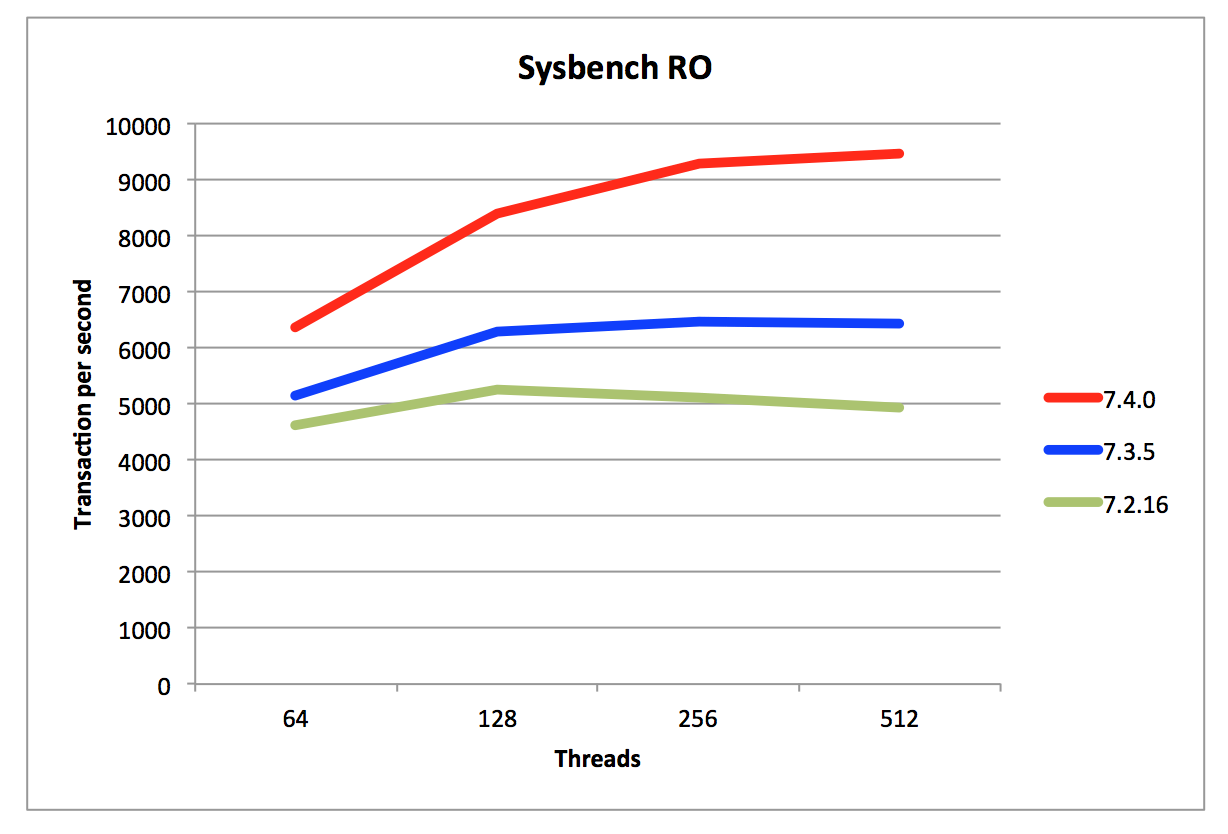
The first version of MySQL Cluster 7.4 has now been released on MySQL Labs. Note that labs loads are not suitable for production use (in fact they’re even less mature than Development Milestone Releases); their purpose is to give users a chance to see what’s in the works, try it for themselves and then provide feedback. Having read that, if you’d like to try it out then Download MySQL Cluster 7.4 from MySQL Labs.

The focus of this first Cluster 7.4 load is performance and data node restart times.

Performance

MySQL Cluster was designed from the outset to be a distributed, in-memory database and …

[Read more]
InnoDB Crash Recovery Improvements in MySQL 5.7

Background

InnoDB is a transactional storage engine. Two parts of the acronym ACID (atomicity and durability) are guaranteed by write-ahead logging (WAL) implemented by the InnoDB redo log.

A statement within a user transaction can consist of multiple operations, such as inserting a record into an index B-tree. Each low-level operation is encapsulated in a mini-transaction that groups page-level locking and redo logging. For example, if an insert would cause a page to be split, a mini-transaction will lock and modify multiple B-tree pages, splitting the needed pages, and finally inserting the record.

On mini-transaction commit, the local mini-transaction log will be appended to the global redo log buffer, the page locks will be released and the modified pages will be inserted into the flush list. Only after the log buffer has been written …

[Read more]
Arduino to the max: 11x11x11 LED-cube

March 29 2014 is Arduino day, also in Labitat. This is a good opportunity to describe my LED-cube:


This LED-cube pulls a number of tricks to get the most out of just a single normal Arduino Uno. A meager 16 MHz and 2048 bytes of RAM goes a long way with sufficient ingenuity and creativity. Here are some highlights:

  • 12-bit PWM, 16 grayscales non-linear.
  • Animations generated on-board, read from SD-card, or streamed over USB.
  • 178 Hz refresh rate, transferring 3 Mbits/s of data to the LED driver shift registers.
  • 50 Hz animation framerate, receiving 269kbit/s of animation data over the serial port.
  • Approximately half of spare CPU time available for on-board generation of …
[Read more]
Presenting MySQL 5.7 Performance & Benchmarks at Percona Live

I’ll speak about MySQL 5.7 Performance & Benchmarks during the incoming Percona Live and will be happy to share with you all our latest finding, improvements, benchmark results, open issues and many other stuff keeping our brains in constant activity ) As you know, there is no a “silver bullet” solution for MySQL Performance tuning.. – only by a good understanding of what is going inside of MySQL and InnoDB you may configure your MySQL server in the most optimal way for your workloads. And this topic is endless, and progressing every month with new solutions and features – all parties are working hard here, and I’m very curious to hear from users during this Conference what are their biggest performance issues for today, and of course looking forward to discuss proposed changes from Percona, Facebook, …

[Read more]
Bloating Your Buffers

There’s one thing that has always bugged me when I review configuration files. People always seem to want to set certain buffer settings to ridiculously high values without really understanding what they’re doing.

Case in point: sort_buffer_size.

The misconception seems to be that setting this value to a high number will always improve a servers performance because everything works better with more memory, right? For some variables (key_buffer, innodb_buffer_pool) maybe, but the entire length of a sort buffer is allocated when ORDER BY is used. In practice, I find it best to leave it at default and watch sort_merge_passes in your status counter to determine if you need to adjust this value. Also, adjust in small amounts.


[Read more]
Presenting MySQL/InnoDB at Percona Live 2014

I will be presenting at Percona Live 2014 and I’m excited to share and discuss the latest and greatest features and improvements that we have made to MySQL/InnoDB in 5.7. Great performance improvements, there are some new exciting compression features that we are working on,  GIS support,  temporary table performance etc.. There is a long list. Also, we are always interested to hear about user issues and priorities so that we can address them and/or work them into our plan. Your feedback is very important for us, if you want to influence the direction of InnoDB development then you need to talk to me .

Showing entries 281 to 290 of 996
« 10 Newer Entries | 10 Older Entries »