A new week of blogs about our development in MySQL Cluster
7.6.
After working a long time on a set of new developments, there is
a lot
of things to describe. I will continue this week with discussing
sharding
and NDB, a new cloud feature in 7.6 and provide some
benchmark
results on restart performance in 7.6 compared to 7.5. I am also
planning
a comparative analysis for a few more versions of NDB.
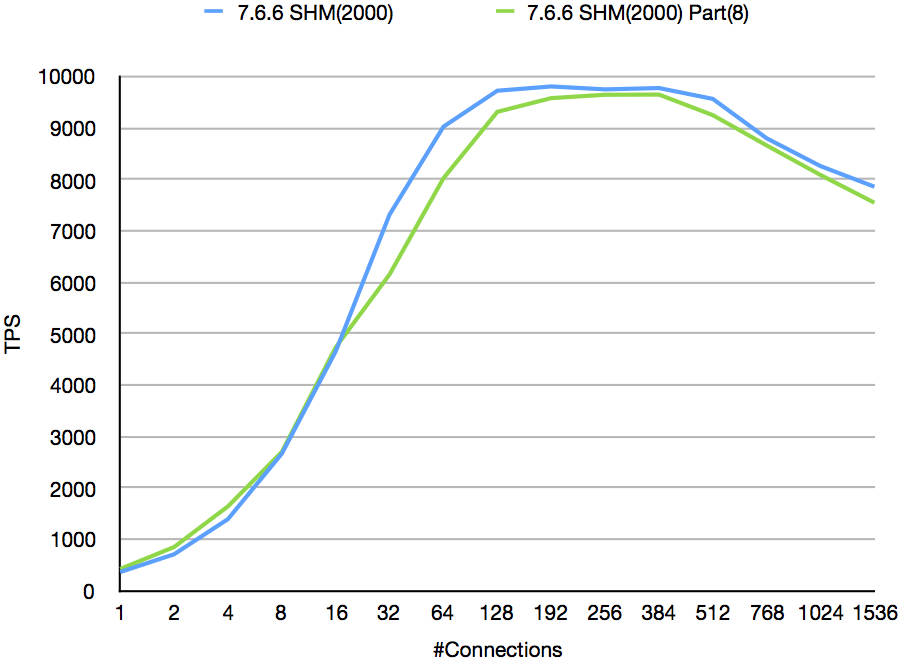
In the blog serie I have presented recently we have
displayed
the performance impact of various new features in MySQL
Cluster
7.5 and 7.6. All these benchmarks were executed with tables
that
used 1 partition. The idea behind this is that to develop a
scalable application it is important to develop …
Jun
11
2018
Jun
08
2018
The MySQL error log is an essential part of database server performance monitoring. Whenever something goes wrong or performance degrades, the Error Logs are usually the first place we look to start troubleshooting.
The MySQL Error Log is one of three related log types:
- The Error Log: It contains information about errors that occur while the server is running (as well as server start and stop events).
- The General Query Log: This is a general record of what mysqld is doing (connect, disconnect, queries).
- The Slow Query Log: It consists of “slow” SQL statements as defined in the long_query_time global variable.
You can enable error log monitoring to allow Monyog to keep an eye on your MySQL Error Log, and notify you when something goes awry. Moreover, Monyog combines the General Query, Slow Query and Error logs in a single view for both network and cloud servers. For example, in the …
[Read more]
Jun
08
2018
Since summer 2017, Amazon RDS supports encryption at rest using AWS Key Management Service (KMS) for db.t2.small and db.t2.medium database instances, making the feature now available to virtually every instance class and type.
Unless you are running Previous Generation DB Instances or you can only afford to run a db.t2.micro, every other instance class now supports native encryption at rest using KMS. As for the Amazon documentation:
Encryption on smaller T2 database instances is useful for development and test use cases, where you want the environment to have identical security …
[Read more]
Jun
08
2018
MySQL 8.0 General Availability was announced in April and it comes with a host of new features. The overview about the new features and improvements made in MySQL 8.0 can be found in the following blog.
The server can be upgraded by performing either an INPLACE upgrade or LOGICAL upgrade. …
Jun
08
2018
This Week in Data with Colin Charles 41: Reflecting on GitHub’s Contribution to Open Source Database
Join Percona Chief Evangelist Colin Charles as he covers happenings, gives pointers and provides musings on the open source database community.
Some big news out from Microsoft about their acquisition of GitHub for $7.5 billion. GitHub hosts many projects, including from the MySQL ecosystem, but maybe more interesting is that their DBA team is awesome, give great talks, and are generally prolific writers. Some of the cool tools the MySQL world has gotten thanks to the excellent team include (but are not limited to): ccql, gh-ost for triggerless online schema migrations, and Orchestrator which is a GUI-based High Availability and …
[Read more]
Jun
08
2018
We will show you how to list all databases in MySQL, i.e how to have a list of all MySQL ...
The post How To Show A List Of All DataBases In MySQL appeared first on RoseHosting.
Jun
08
2018
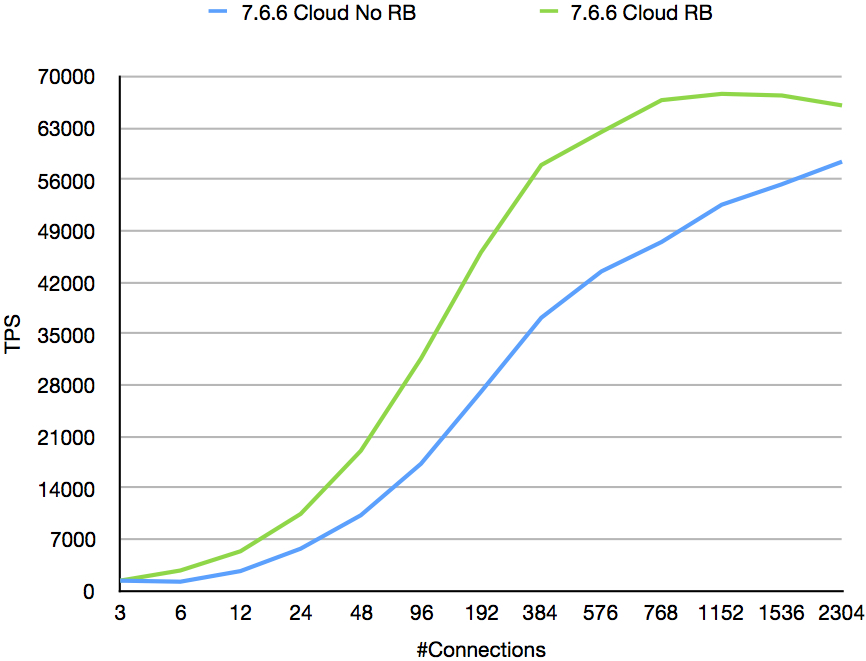
The previous blog demonstrated the
improvements from using the Read Backup
feature in NDB in a tightly connected on premise installation.
Now we will
show how the performance is impacted when running on the Oracle
cloud.
In both benchmarks we show here the MySQL Server and the NDB data
node
are colocated and we have one node group where the combined data
nodes
and MySQL Servers are placed in their own availability domain. We
use all
3 availability domains and thus we have 3 synchronous replicas of
the
data in the database. This means that all communication between
data nodes
and all communication not using the local data node from the
MySQL server
will also communicate to another availability …
Jun
07
2018
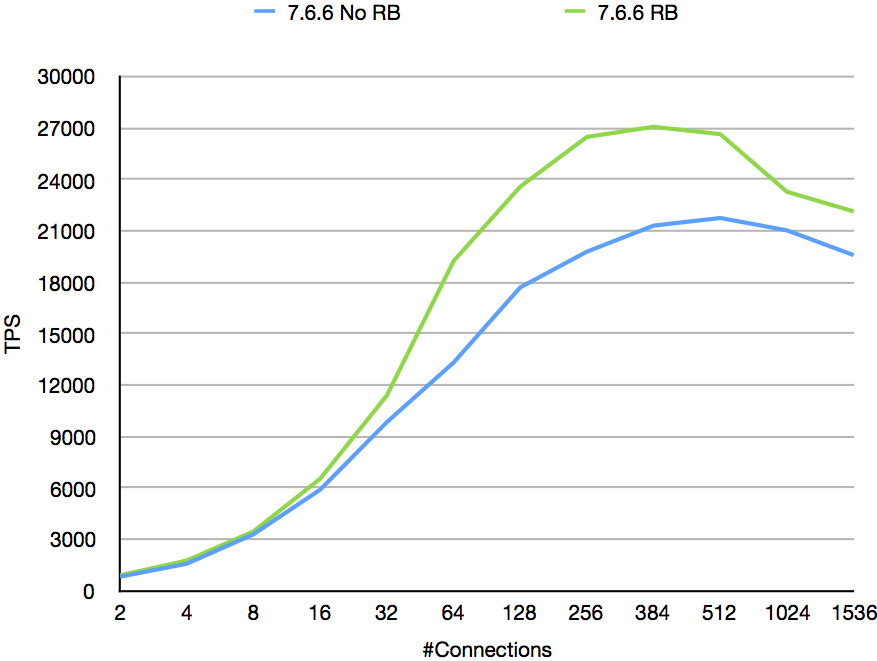
Read Backup was a new feature in MySQL Cluster
7.5. When MySQL
Cluster 7.5 was released I was already busily engaged in
working
on the partial LCP feature we now released in 7.6. So I had
not
much time producing benchmarks showing the impact of the
Read Backup feature.
Read Backup means that committed reads in NDB can use the
backup
replicas as well. In NDB tables reads are already directed
towards
the primary replica. The reason is that MySQL Cluster wants
to
ensure that applications can trust that a reader can see his
own
updates. Many modern NoSQL DBMSs lack this feature since they
are
using eventual replication and a very flexible scheduling of
which
replicas to read. NDB provides a stronger …
Jun
07
2018
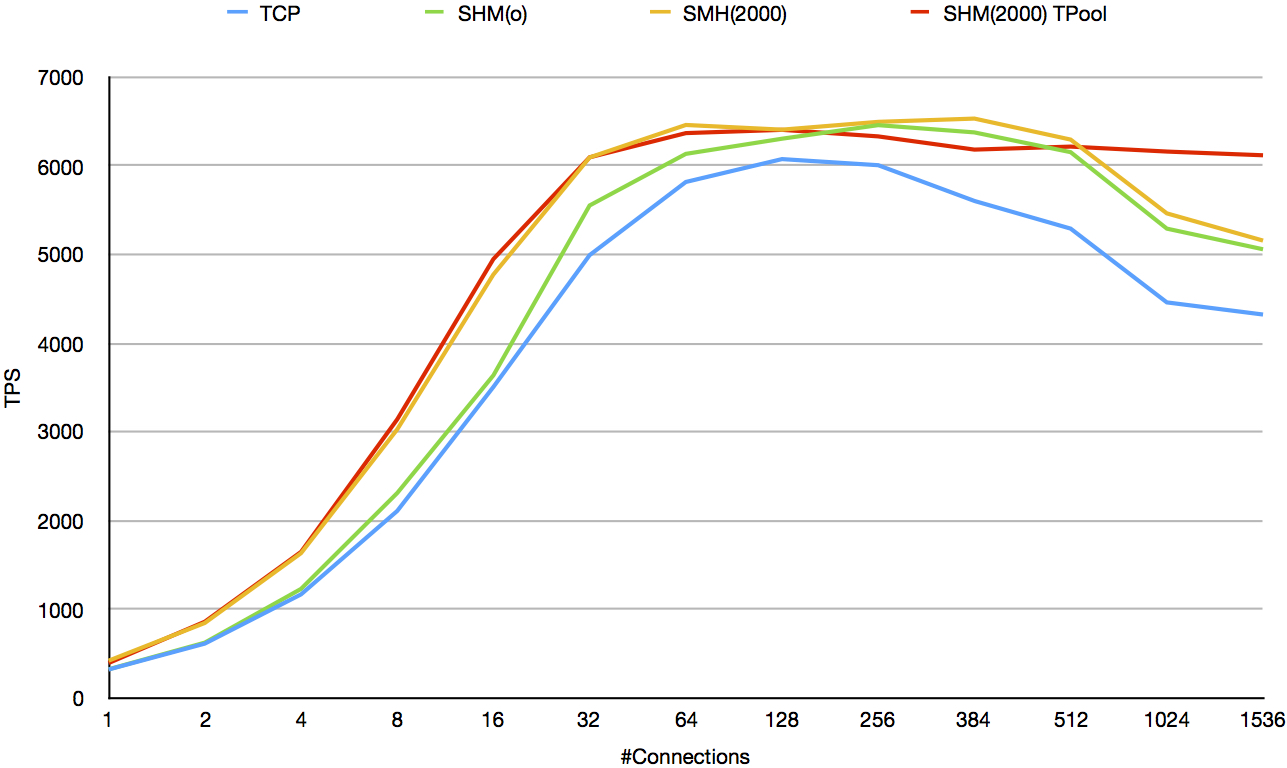
Looking at the graphs in the previous blog
post one can see that
MySQL Cluster 7.6 using the shared memory transporter can
improve
performance at very high thread counts by more than 100%.
Still
the performance is still dropping fairly significantly moving
from
512 to 1536 threads. The MySQL Server using the NDB
transporter
scales very well on all sorts of architectures and using very
many
cores. But I have noted that when the number of connections
goes
beyond some limit (in my benchmarks usually around 512
threads),
the performance starts to drop.
Actually in the commercial version of MySQL Cluster help is
available
to resolve this problem. The thread pool was developed by me and
a team
of performance …
Jun
07
2018
Container orchestration tools simplify the running of a distributed system, by deploying and redeploying containers and handling any failures that occur. One might need to move applications around, e.g., to handle updates, scaling, or underlying host failures. While this sounds great, it does not always work well with a strongly consistent database cluster like Galera. You can’t just move database nodes around, they are not stateless applications. Also, the order in which you perform operations on a cluster has high significance. For instance, restarting a Galera cluster has to start from the most advanced node, or else you will lose data. Therefore, we’ll show you how to run Galera Cluster on Docker without a container orchestration tool, so you have total control.
Related resources
MySQL on Docker - How to Containerize Your …
[Read more]