Part 1 of 2: (part two)
If you have used MySQL for a while, you have probably used
mysqldump to backup your database. In part one
of this blog, I am going to show you how to create a simple full
and partial backup using mysqldump. In part two, I will show you how to use MySQL Enterprise Backup (which is the
successor to the InnoDB Hot Backup product). MySQL …
May
19
2015
May
18
2015
May
17
2015
Student questions are always interesting! They get me to think and to write. The question this time is: “How do I write a Bash Shell script to process multiple MySQL script files?” This post builds the following model (courtesy of MySQL Workbench) by using a bash shell script and MySQL script files, but there’s a disclaimer on this post. It shows both insecure and secure approaches and you should avoid the insecure ones.
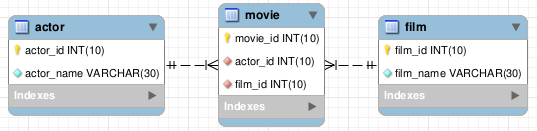
It seems a quick refresher on how to use arrays in
bash shell may be helpful. While it’s essential in a
Linux environment, it’s seems not everyone masters the
bash shell.
Especially, since I checked my …
[Read more]
May
15
2015
Yesterday I was able to present to the Portland MySQL Users Group two presentations that are important foundations for effective development with MySQL.
Download Architecture Presentation
Download Development Presentation
With 26 years of architectural experience in RDBMS and 16 years of MySQL knowledge, my extensive …
[Read more]
May
15
2015
In an earlier post titled Using Perl to send tweets stored in a MySQL database to twitter, I showed you a way to use MySQL to store tweets, and then use Perl to automatically send your tweets to twitter.
In this post, we will look at automatically sending a “thank you” to people who retweet your tweets – and we will be using Perl and MySQL again.
Just like in the first post, you will need to register your application with twitter via apps.twitter.com, and obtain the following:
consumer_key
consumer_secret
access_token
access_token_secret
One caveat: twitter has a rate limit on how often you may connect with your application – depending upon what you are trying to do. See …
[Read more]
May
15
2015
Welcome to MySQL QA Episode 2: Build a MySQL Server – Git, Bazaar (bzr), Compiling, and Build Tools
In this episode you’ll learn how to build Percona Server and/or MySQL Server for QA purposes & more in this short 25 minute tutorial.
In HD quality (set your player to 720p!)
To watch the other episodes in this series, see the MySQL QA & Bash Linux Training Series post. If you missed MySQL QA Episode 1, it was titled “Bash/GNU Tools & Linux Upskill & Scripting Fun.” You are watch it here.
If you have any questions or comments, please leave them below.
The post …
[Read more]
May
14
2015
MySQL 5.6.24 was recently released (it is the latest MySQL 5.6, is GA), and is available for download here.
For this release, there are 4 “Functionality Added or Changed” items:
- Functionality Added/Changed: CMake support was updated to handle CMake version 3.1.
- Functionality Added/Changed: The server now includes its version number when it writes the initial “starting” message to the error log, to make it easier to tell which server instance error log output applies to. This value is the same as that available from the version system variable. (Bug #74917)
- Functionality Added/Changed: ALTER TABLE did not take advantage of fast alterations that might otherwise apply to the operation to …
May
14
2015
MySQL 5.5.43 was recently released (it is the latest MySQL 5.5, is GA), and is available for download here:
http://dev.mysql.com/downloads/mysql/5.5.html
This release, similar to the last 5.5 release, is mostly uneventful.
There were only 2 “Functionality Added or Changed” items this time, and 10 additional bugs fixed.
Out of the 10 bugs, there was 1 InnoDB bug, 1 replication bug, and 6 crashing bugs, all of which seemed rather minor or obscure. Here are the ones worth noting:
- Functionality Changed: CMake support was updated to handle CMake version 3.1.
- Functionality Added: The server now includes its version number when it writes the initial “starting” message to the error log, to make it easier to tell which server instance error log output applies to. This value is the …
May
14
2015
MariaDB is looking to hire Support Engineers. If interested, email me your resume.
I look forward to hearing from you.
May
14
2015
MySQL 5.7.7 was recently released (it is the latest MySQL 5.7, and is the first “RC” or “Release Candidate” release of 5.7), and is available for download here and here.
As for the fixes/changes, there are quite a few again, which is expected in an early RC release.
The main highlights for me were (though the enhancements, and potentially impactful changes, are definitely not limited to this list):
- Optimizer Note: It is now possible to provide hints to the optimizer within individual SQL statements, which enables finer control over statement execution plans than can be achieved using the optimizer_switch system variable. Optimizer hints are specified as /*+ … */ comments following the SELECT, INSERT, REPLACE, …