The VM for Linux prefers system cache over application memory.
What does this mean? The best way I can explain is by
example.
Imagine you have 32 GB of RAM
MySQL is set to take 20 GB of RAM for a process based buffer and
up to 6M for the various thread buffers.
Over a period of time the box swaps. The only thing that is
running is mysql and its memory size is around 21GB for resident
memory. Why does swap grow when there is plenty of memory? The
reason is when a memory alloc is needed (thread based buffer is
tickled) the VM will choose to use swap over allocating from the
system cache, when there is not enough free memory.
DO NOT TURN OFF SWAP to prevent this. Your box will crawl, kswapd
will chew up a lot of the processor, Linux needs swap enabled,
lets just hope its not used.
So how do you stop Nagios pages because of swap usage? Well if
you have a few choices.
…
I needed to uniquely identify a request to Pentaho (one particular action sequence request). Found a pretty darn easy way to do this with the help from Java RMI classes.
- Insert a Javascript data source
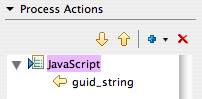
- Enter the following script
function getGUID() {
var VMID = new Packages.java.rmi.dgc.VMID();
return VMID.toString();
}
getGUID();
- Set return type as “string” for a new value

- Add it to your response
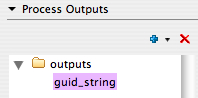
…
[Read more]Ever since Peter over at Percona wrote about MySQL and swap, I’ve been meaning to write this post. But after I saw Dathan Pattishall’s post on the subject, I knew I’d better actually do it.
There’s a nasty problem with Linux 2.6 even when you have a ton of RAM. No matter what you do, including setting /proc/sys/vm/swappiness = 0, your OS is going to prefer swapping stuff out rather than freeing up system cache. On a single-use machine, where the application is better at utilizing RAM than the system is, this is incredibly stupid. Our MySQL boxes are a perfect example – they run only MySQL and we want InnoDB to have a lot of RAM (32-64GB …
[Read more]If you’re waiting for High Performance MySQL Second Edition to hit the shelf, you’re not the only one. I am too! I can’t wait to actually hold it in my hands. But you don’t have to wait idly. No, not at all! You can pre-order it and then you’ll get it as soon as possible. Plus your pre-order will help them figure out how much demand there is, so it doesn’t sell out and make you wait for your own copy.
Zack Urlocker says MySQL 5.1 has zero bugs. He may have been misquoted, or quoted out of context, but there it is. I’ll quote enough of it that you can’t take it out of context twice: Mickos also said MySQL 5.1 has upgraded its reliability and ease of use over 2005′s v5.0. "Now we can admit it, but this version is much improved over 5.0, which we weren't totally happy with,"
2008 was announced as the year of the *change*.
On February I started work on performance tuning features and I planned those two new Editions of HoneyMonitor (Pro and Audit Pro).
On March I returned back to Trieste - my University town - after a two-year-full-immersion experience at HoneySoftware, in Caltagirone, where I forgot all the job-not-related aspects of the human life.
On April, meeting my (old and new) friends, going to cinema and doing things like those, I recovered my social life.
I removed the password protection from my blog, I announced HoneyMonitor Audit Pro (publishing 150+ screenshots of that Edition), I removed some out-of-date pages of our site …
[Read more]I was reading a post about The Swag Report and realized that I stayed so busy at the Phorum booth (and a little at the memcached booth) and preparing for my talks, I did not bother to go around and collect any swag from the conference. So, if you are a vendor and want to mail me some swag that I missed, you can send it to: Brian Moon, 198 S. Hillcrest Rd., Odenville, AL 35120. Of course, I expect nothing. But, ya never know what product I might pimp because of a t-shirt. =)
|
|
Programming databases is tricky. If you need the basic access only, any programming language can do. But when you want to get some advanced feature, you face difficult choices. If you are lucky, the feature you are looking for is available in a library compatible with your language of choice. But usually it happens that you are writing in Java, and your life-saving routine is only available in Perl, or you are writing in PHP and striving for features that are buried deep into a Java class. Hard choices. But it does not have to be that way. Sometimes, you can develop closer to the server, in such a way that any client, using any programming language, can access your extended routine. MySQL, although not as equipped with built-in features like some competitors, is nonetheless particularly suited for such … |
I was reading a post about The Swag Report and realized that I stayed so busy at the Phorum booth (and a little at the memcached booth) and preparing for my talks, I did not bother to go around and collect any swag from the conference. So, if you are a vendor and want to mail me some swag that I missed, you can send it to: Brian Moon, 198 S. Hillcrest Rd., Odenville, AL 35120. Of course, I expect nothing. But, ya never know what product I might pimp because of a t-shirt. =)
[Read more]Sun is aggressively pushing T2000 as Scalable MySQL Platforms, and indeed it is Scalable in terms of high concurrency workloads - it is able to execute a lot of concurrent threads and so speed gain from 1 thread to say 32 thread will be significant.
But thing a lot of people miss is - Being Scalable is Not Enough - you need to scale from reasonable base to claim the good performance, and this is where T2000 performs subpar in many cases.
I often hear about people complaining queries take much longer on T2000 compared to recent Intel or AMD CPUs when there is no concurrent load - It is reported T2000 can be as much as 5-15 times slower in this case depending on the workload.
Here is example run of purely CPU consuming "Benchmark" function for 2.6Ghz Intel Xeon vs T2000:
PLAIN TEXT SQL: …
[Read more]