A
Community journal
Follow the feed
The latest from the MySQL community
Ideas, releases, practical guides, and perspectives from the people building with MySQL.
Showing entries 38071 to 38080 of 45508
« Previous |
Next »
Jul
26
2007
Jul
26
2007
So, last night a group of us sat down and went through all the mini-conf proposals for linux.conf.au 2008
There were a lot of proposals. There were also a lot of good ones.
We’re not announcing anything yet… but in the interest of openness… here’s the procedure.
We started out as any responsible group of selectors would…. looking at the proposals over beer:
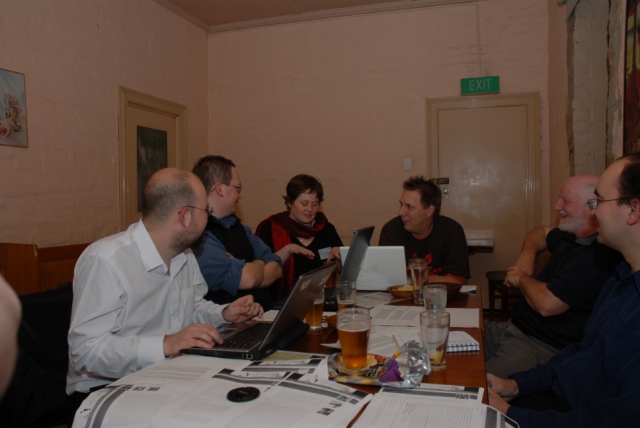
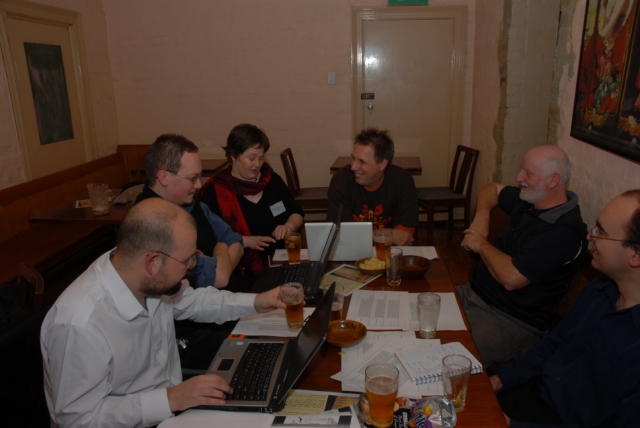
a few jokes thrown in… frank discussion and all that. But really, we came to the conclusion that it’d been all done before and we needed to somehow narrow down all the excellent suggestions…
Luckily, the pub we were meeting at had the right …
[Read more]
Jul
26
2007
For those who may not have noticed, I was suckered into asked to take over part of Matt Asay's former blog over at InfoWorld when he fled the coop moved his blogging over to CNet. Both my old blog (that's this one, www.theopenforce.com) and the new one are aggregated at PlanetMySQL so for many folks this may not be any big deal. I will continue to post occasionally on this blog, but most of my postings will be done on the InfoWorld site for now along with co-conspirators Dave Dargo, Savio Rodrigues, and Dave Rosenberg. It's just too much work to maintain two blogs at the same pace.
Here are some of the recent stories I posted at Infoworld:
- …
Jul
26
2007
The huge power outage at 365, affecting such sites as craigslist.org and
Yelp, brings to
mind some important thoughts about redundancy and infrastructure.
Of the many sites at 365, including both new, interesting
startups and more mature sites, how many survived the power
outage well? More importantly, did they lose power on their
databases, and then did they lose any data?
It's easy to believe in your provider when they assure you of
uptime, redundant power, excellent cooling, and whatever else
they promise to get your business. But you really shouldn't, and
this is an example of why. You must have multiple sites!
Preferably geographically diverse (nothing hurts like an
earthquake or hurricane taking out your main data center and your
redundant data center at the same time).
MySQL, sadly, is not a durable database when …
Mike Olson pointed me to this excellent Wired article on the disappearance and search for noted database researcher Jim Gray. Jim is apparently the sort of developer that every company on the planet wanted to hire. At this point, no one wants him more than his family. Yet he's ...
Jul
26
2007
One of the most popular keynotes of the MySQL Conference & Expo 2007 was called "The Clash of the DB Egos". It was a fight amongst seven database luminaries, all playing an important role either within MySQL AB or as providers of Storage Engines that work closely with MySQL. This article attempts at giving a picture of what the fight was about, through reciting the egos and the questions posed to them by the referee.
Jul
25
2007
After several months I have again spent a little work in the MySQL Index Analyzer I first published back in August of 2006.
I added a feature that will find duplicate columns inside an index, caused by the internal appending of the InnoDb primary key columns to each secondary index.
To get the code and read more about the new feature, including an example, go to the MySQL Index Analyzer Blog.
Jul
25
2007
I came up with the following trick in response to a question in
the #mysql channel on Freenode. A user needed to create a unique
identifier for multiple otherwise duplicate entries. Yes that was
bad schema design to begin with, but it was a fun challenge to
see if it could be resolved without scripting. And it can... it's
based on a known trick of numbering output rows. What's new is
restarting the counter for each group (name).
CREATE TABLE number (name CHAR(10), val INT DEFAULT 0);
INSERT INTO number (name)
     VALUES ('foo'),('bar'),('foo'),('foo'),('bar');

SET @lastval=0, @lastuser='';

UPDATE number
   SET val=(@lastval:=IF(name=@lastuser,@lastval+1,1)),
       name=(@lastuser:=name)
 ORDER BY name;

SELECT * FROM number ORDER BY name,val;
+------+------+
| name | val  |
+------+------+
| bar  |    1 |
| bar  |    2 |
| foo  |    1 |
| foo  |    2 |
| foo  |    3 |
+------+------+
Jul
25
2007
SugarCRM to adopt the GPLv3. SiCortex secures $10m in venture debt. BMC opens up on OSS plans. (and more)
SugarCRM Open Source Project Announces Adoption of GPL v3 Free & Open Source Software (FOSS) License, SugarCRM (Press Release)
SiCortex Ramps up with $10 Million in Venture Debt, SiCortex (Press Release)
ITema Releases the First Enterprise Service Bus for PHP Developers, ITema (Press Release)
Entrust Contributes Essential PKI Technology Component to Open-Source Community, Entrust (Press Release)
…
[Read more]
Jul
25
2007
After several months I have again spent a little work in the MySQL Index Analyzer I first published back in August of 2006.
I added a feature that will find duplicate columns inside an index, caused by the internal appending of the InnoDb primary key columns to each secondary index.
To get the code and read more about the new feature, including an example, go to the MySQL Index Analyzer Blog.